Sign up for our Monthly STEM Newsletter here.
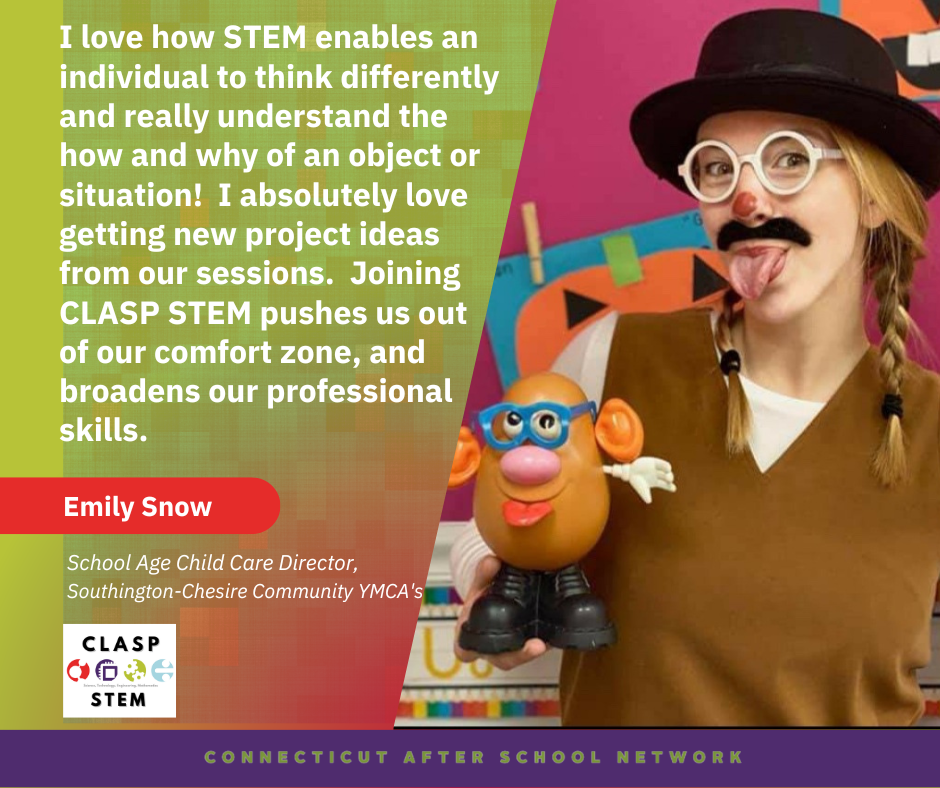
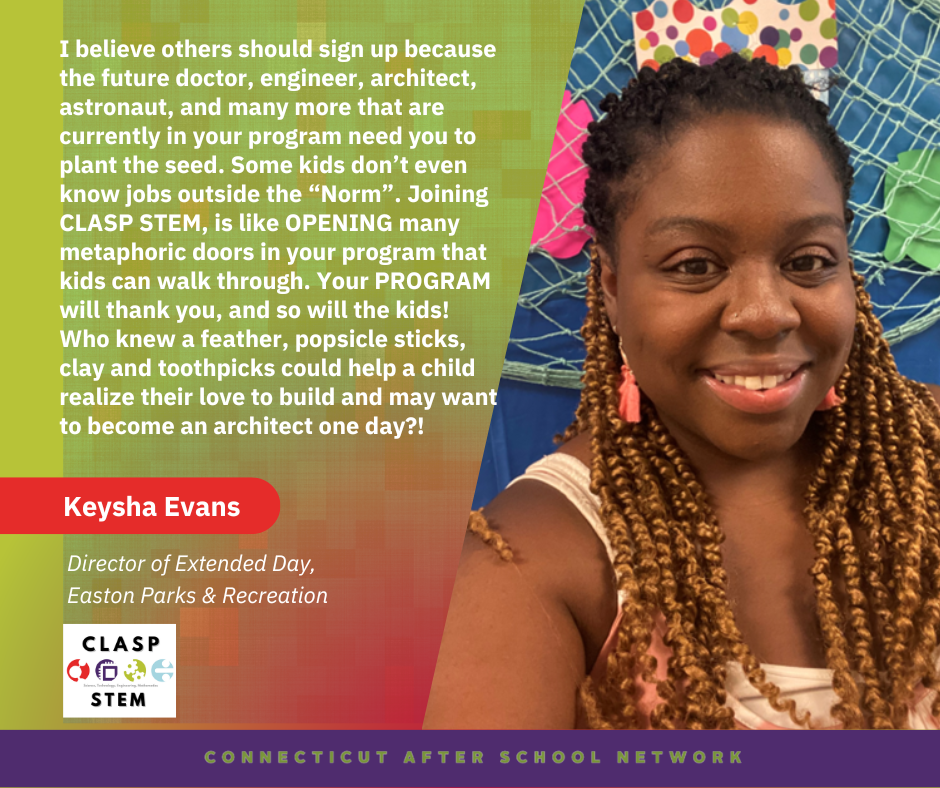
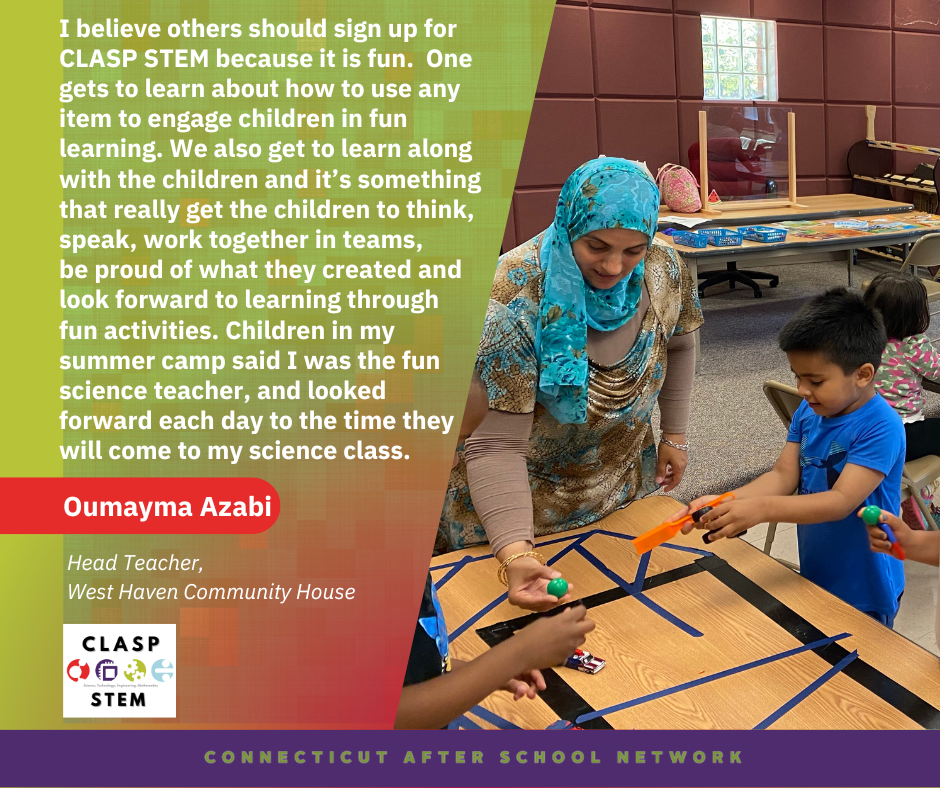
See what our past participants have to say about their CLASP experience.
PROFESSIONAL DEVELOPMENT
Career-Connected Learning Framework
Afterschool and summer programs give youth the freedom to explore, experiment, and connect learning to real life. To help programs turn that spark of curiosity into career readiness, STEM Next created the Career-Connected Learning Framework.
This resource assists afterschool program providers in integrating career awareness, exploration, and preparation into hands-on, age-appropriate STEM activities grounded in real-world relevance.
Explore the framework and access recordings that break down key strategies for implementing career-connected learning in your program.
From EiE to YES: The Evolution of Engineering Education
September 24, 2026
7:00-8:00 pm EST
Discover how Engineering is Elementary evolved into Youth Engineering Solutions and how their STEM resources continue to grow to support today’s learners and educators. This webinar explores the evolution from EiE to YES, highlighting updated curriculum, educator supports, and engineering challenges like Pumpkin Pollinators and Parachutes that reflect authentic, hands-on learning experiences.
Building AI Literacy for Inclusion in STEM: Recommendations in Action in OST Settings
September 29, 2026
1:00 pm EST
As AI continues to reshape educational landscapes, Out-of-School Time (OST) programs play a pivotal role in ensuring all youth have equitable access to AI learning. Join NGCP and STEM Next Opportunity Fund for actionable strategies and real-world examples to empower OST educators, program leaders, and community partners.
This session is the second installment in NGCP’s 3-part AI literacy webinar series, created as part of the Building AI Literacy for Inclusion in STEM, an initiative developed by NGCP in partnership with Ingenia Learning and STEM Next Opportunity Fund, made possible through the generous support of the AMD Foundation. Register for part 3 here.
ACTIVITIES FOR YOUTH
Ongoing and time-sensitive opportunities to engage in STEM learning.
STEM Next’s TECH Quest activities help afterschool and summer educators engage youth in using technology to explore real-world challenges and make a positive impact. Designed as a quick start for educators, these three ready-to-use activities for youth in grades 5-8 explore science communication, environmental stewardship, and AI while building skills in problem-solving, communication, creativity, and collaboration.
The three activities include:
- Be the Voice of Science: Use Keynote to create a science communication piece that explains a complex scientific idea clearly and creatively.
- Planet Protectors: Explore how scientific discoveries help us understand and protect our planet, then use technology and creativity to communicate findings.
- AI for Good: Explore how AI is used and design an AI-powered idea that could make a positive impact at school or in the community.
Get the activities and explore more on STEM Next’s TECH Quest Resource Hub.
Challenge Based Learning, or CBL, is a flexible framework that empowers learners to co-own and co-author learning experiences, ultimately bringing Career-Connected Learning to life! This Activity Bundle from STEM Next is designed as a “quick start” for out-of-school time educators looking to bring CBL and career-connected learning into their programs. Through three hands-on lessons, youth in grades 5-8 explore science, environmental stewardship, and AI while building skills in problem-solving, communication, and collaboration. Each activity invites learners to take ownership, apply their ideas to real challenges, and create solutions that connect to their communities. Check out the CBL Activity Bundle here.
This summer, Hack Club is partnering with NASA, AMD, and GitHub to launch the Stardance Challenge, the world’s biggest STEM challenge for teens ages 13-18. Your students can choose what technical projects to build (apps, games, circuits, hardware) and get rewarded with free real-world prizes like 3D printers and Raspberry Pis. No prior software or hardware experience is needed; both beginners and experienced coders are welcome. Just show the 2-minute intro video in your class to get students signed up, and you’ll receive a free Artemis II mission patch.
Head to stardance.hackclub.com/edu to learn more about the challenge!
STEM CAREERS
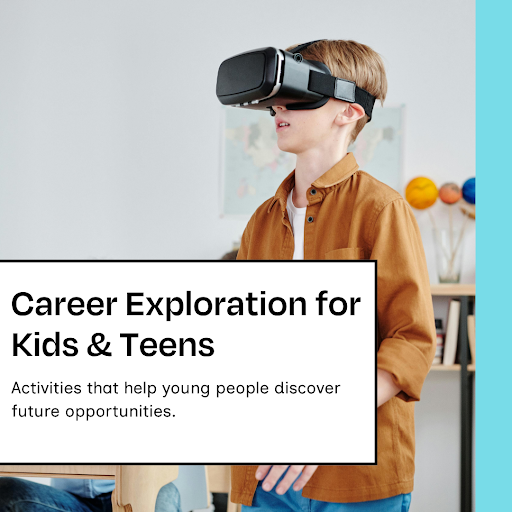
Finding the right direction in one’s career is a crucial step, which is why early career exploration activities are so important for kids. These activities can start as early as career exploration activities for elementary students and continue through middle school career exploration and career planning activities for high school students, helping children and teens discover their interests and set realistic goals.
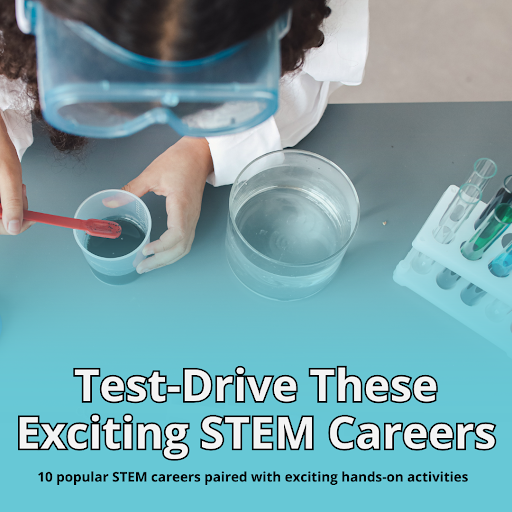
Want to help youth choose which future STEM careers are for them? This resource from Science Buddies helps youth learn more about science and engineering careers and “test-drive” their interest in certain careers by trying one of these science experiments related to popular STEM career paths. Many kids are interested in popular science and engineering careers they hear about, but do they know what it’s really like to go to work in that career? What kinds of tasks, projects, and experiments does someone in that job really do? Trying out projects, experiments, and activities related to specific career paths is a great way to help students more clearly understand different science and engineering fields. This kind of exploration also helps students see that within the umbrella terms “scientist” and “engineer,” there are lots of interesting and exciting career paths and opportunities!
Science Buddies has paired 10 popular STEM careers with exciting hands-on activities that make it fun for kids to test-drive careers of interest. Which ones will they enjoy most?
Learn more here.
Science Buddies offers more than 1,200 STEM projects and 179 activities that explicitly connect youth to STEM Careers. Find videos of the week, creative ways to teach the Scientific Method and Engineering Design Process, and the latest science news.
Visit sciencebuddies.org
Research-Based Practices & Career Awareness and Exploration
STEM Next aims to raise awareness of research-based practices proven to increase the quality of STEM learning experiences for youth, and is committed to strengthening career awareness and exploration in out-of-school time so youth are prepared for whatever comes NEXT.
CareerXplorer from LabXchange at Harvard University unites education and industry in an interactive career exploration tool built for learners. CareerXplorer unites K–12 education, higher education, and STEMM industries in one streamlined career exploration tool that emphasizes career-connected learning through interactive content.
Fun and Interactive Ways to Teach Kids About Jobs and Career Exploration – Explore innovative ways to make learning and job exploration an exciting adventure for kids.
other resources
- Simply STEM – December
- DEI Bytes – The Alliance for Identity Inclusive Computing Education’s “DEI Bytes” lesson series on YouTube focuses on developing equitable teaching skills for CS education, including topics on ableism, unconscious bias, and computing access.
- Simply STEM – November
- Simply STEM – October
- Simply STEM – September
- NGCP Blog – Supporting Space STEM Education: Resources to Spark Curiosity and Inspire STEM Learning – This blog post shares a list of resources put together based on NGCP’s experience at the National Space Council’s Space STEM Forum along with the ongoing work of NGCP supporting gender equity in STEM.
- NGCP Blog – Picture Books to Break Stereotypes in STEM (and Beyond!) – Find a list (with links) to the best STEM picture books for young learners featuring diverse characters and girl-centered stories.
- Simply STEM – August
- Simply STEM – July
- Simply STEM – June
- Simply STEM – May
- Simply STEM – April
- DNA Day
- Building a Community for Indigenous Mathematicians – Easy to read article on identifying as an indigenous mathematician and how to become part of a community of mathematicians.
- Three Ways Educators Can Shift the Way They Talk About Science – Blog post with simple suggestions for educators based on research conducted by Amanda Cardarelli at NYU.
- Simply STEM – March
- Simply STEM – February
- Simply STEM – January
- ‘I’m not just a mom’: Parents as creators, collaborators, and learners in creative computing
- National STEM Day
Look Up – August
Look Up – July
Look Up – June
Look Up – May
Look Up – April
- From Click2Science, this excellent guide includes everything needed to conduct a professional development session or do the activities. The easy to download handouts include links to the video-based learning module and hands-on learning activities.
This easy to access guide takes a look at what’s included in 21st Century skills, how they help students, and why they’re so important. Click to download a free guide on how you can teach 21st Century skills with middle or high school youth.
The 4C’s — collaboration, communication, creation, and critical thinking — represent the knowledge, skills, and expertise youth need today to prepare for tomorrow’s workforce. Nearpod teaches these concepts using technology. After School educators can sign up for a free Nearpod account to access tips and guides to implement the 4Cs with any content area.
MENTOR hosts a free toolkit to support educators. In addition to the toolkit and implementation guide, afterschool educators can sign up for a free newsletter and also have access to the resources library.
Inspiring students to pursue careers in STEM (science, technology, engineering, and mathematics) fields is essential in today’s rapidly evolving technological landscape. STEM disciplines are at the forefront of innovation and progress – driving breakthroughs that shape the future of the world. Encouraging students to embrace STEM subjects prepares them for successful careers and fosters a workforce of passionate, capable STEM workers prepared to address complex global challenges. This site lists 10 activities to engage youth in thinking about STEM careers.
- Help youth discover career paths and broaden their perspectives of engineering and other STEM fields with our YES Careers resources! Download our free Careers for Engineers posters; you can have students review them before or after teaching a related engineering unit or post them on the wall to refer to throughout the year. Click here for free Careers for Engineers Posters
Ready, Set, Go: Career Navigation modules are designed for high school educators and youth advocates to facilitate their students learning about career training programs as postsecondary options. The modules are free and downloadable at www.sharedlane.co
- College and Career Readiness Middle School Playlist: This playlist is designed for middle school audiences focused on the College & Career Readiness Toolkit developed by the Maryland Out of School Time Network. This playlist distills the CCR Toolkit information into an actionable sequence for out-of-school time practitioners to implement with youth in their program. The Playlist consists of eight (8) 60-90 minute sessions aimed at middle school youth and one (1) session of pre-work for practitioners and organizational leaders only. Check out the accompanying CCR Middle School Playlist Youth Workbook.
Afterschool and summer programs are excellent spaces to prepare youth for their future careers. Early exposure to opportunities, understanding the world of work, and skill development enable children to discover their passions in life. But it doesn’t have to be boring or stressful, especially for younger youths. With some activities in place, early career exploration can become interactive and engaging for students. So let’s explore some innovative ways to make learning and job exploration an exciting adventure for kids.
- STEM Pathway Strategy: Near-Peer Mentorship Model – Learn more about near-peer mentorship models as a strategy to build relationships with youth, connect to youth culture, and better understand their STEM related interests. Ultimately youth engage their STEM interests in programming and develop relationships with mentors who can offer guidance and support whether STEM-related or not.
STEM Pathway Strategy: Translating Youth Interests to STEM Career and Entrepreneurship – Learn more about how Afterschool State Networks and programs can connect youths’ interests with potential STEM career opportunities they may not otherwise encounter or know about. This is critical to developing STEM pathways because youth build their professional STEM networks and pursue STEM careers, which leads to a larger and more skilled STEM workforce in the state/network/community. Learn more here.
Women in the STEM Workforce: Stories and Learnings from Corporate Leaders – We explore the realities and opportunities for women in the STEM workforce. We will hear from leaders sharing insights, experiences, and strategies for creating an inclusive work environment. We discuss the challenges faced by women in STEM careers, balancing careers and family, steps to overcome workplace biases, and the importance of championing equal opportunities and career advancement for women. This episode offers valuable perspectives and inspiration for both aspiring and current professionals in the STEM field. Listen now.
Test-Drive a STEM Career with Fun Science Experiments – Many kids are interested in popular science and engineering careers they hear about, but do they know what it’s really like to go to work in that career? What kinds of tasks, projects, and experiments does someone in that job really do? Trying out projects, experiments, and activities related to specific career paths is a great way to help students more clearly understand different science and engineering fields. This kind of exploration also helps students see that within the umbrella terms “scientist” and “engineer,” there are lots of interesting and exciting career paths and opportunities! There are 10 popular STEM careers paired with exciting hands-on activities that make it fun for kids to test-drive careers of interest.
- How to Integrate Technology – Successful technology integration is more than just getting the tools into the classroom; here are some ideas on how to engage students and enliven lessons with those tools.
- Physical Computing’ Connects Computer Science With Hands-On Learning – This article highlights the hands-on approach to teaching computational thinking and positions it as is a good way to “check off” the competencies that students should learn as part of the Computer Science Teachers Association K-12 Computer Science Standards and the Next Generation Science Standards.
- Brilliant – Designed for older youth (13+) these visual, interactive lessons make concepts feel intuitive — so even complex ideas just click. Real-time feedback and simple explanations engage and encourage youth.
As technology continues to evolve, it’s crucial that we prepare the next generation for the jobs of tomorrow. This fantastic resource offers 8 practical ways to integrate AI and technology into youth education. Let’s help students get ready for their future! Explore more: https://www.cde.ca.gov/ci/pl/aiincalifornia.asp
- Great Career Exploration Resources from Illumina and Verizon Partners
- Career Girls – A comprehensive video-based career exploration tool for girls featuring diverse women STEM role models. It’s free to use and contains 16,000 videos, as well as career quizzes and resources.
- Engineering Mindsets/Computer Science: AI 101 for Teachers – This is a free, foundational online learning series for educators interested in AI. The series features lessons from Code.org, ETS, ISTE and Khan Academy to demystify AI, explore responsible implementation, address bias, and showcase how AI-powered learning can revolutionize.
- Engineering Mindsets/Computer Science: Teach Computer Science & Coding to Kids – This Google sponsored site supports educators to engage youth in coding activities. It’s free, fun, and no computer science experience is required. The lessons are video based and cover a variety of subjects.
- FabFems – A collection of resources for role models, educators, and parents to inspire and educate girls about science, computer science, technology, engineering, and mathematics courses and careers. The website includes Resources for Role Models and Resources for Girls.
- Million Womens Mentors – MWM is the premier network dedicated to encouraging girls and women around the world to pursue, persists, and succeed in STEM careers.
- National Mentoring Resource Center – A collection of mentoring resources including handbooks, curricula, manuals, and other resources that practitioners can use to implement and further develop program practices.
- Techbridge Role Model Training and Resources – These resources are for adult or near-peer role models to develop skills for engaging girls and historically excluded youth in STEM through guides, videos, and questions.
- Access to STEM Framework: To improve the overall quality of out-of-school STEM programs, we need to address how program providers design and implement programming to increase access in STEM for youth who have been underrepresented in the STEM fields. Partnering with the National Girls Collaborative Project (NGCP) and national experts, we have developed an Access to STEM Framework — a guide for supporting program providers in this transformation. Download the Framework.
- IF/THEN Collection – The IF/THEN® Collection is the largest free resource of its kind dedicated to increasing access to authentic and relatable images of real women in STEM. Here in this digital library, you will find thousands of photos, videos and other assets that authentically represent women in the fields of science, technology, engineering, and math (STEM). The content features careers as diverse as shark tagging, fashion design, and training Olympic athletes, and nudges public perceptions in a more realistic direction that illuminates the importance of STEM everywhere.
- Mentoring in a Box – Technical Women at Work – The Mentoring-in-a-Box: Technical Women at Work is a resource from the National Center for Women & Information Technology (NCWIT). This resource offers activities, resources, and tools to support a mentoring pair, presented in an easy-to-use format. Visit www.ncwit.org/resources for more related NCWIT resources.
- ACE Mentor Program: Architecture, Construction, and Engineering – The ACE Mentor Program of America, Inc. not only engages sponsors and volunteer mentors to expose students to real-world opportunities, but it also financially supports each student’s continued success through scholarships and grants. The ACE program helps to mentor high school students and inspires them to pursue careers in design and construction.
- Past Monthly Activities
- Learn more about the Hour of Code, download the Afterschool Guide for Hour of Code to explore activities and tutorials, and encourage programs to register as an official Hour of Code site to globally engage and take advantage of the full Hour of Code experience.
- Generation Genius – This video and easy to do activity demonstrate how adding carbon dioxide to water changes it. The activity has clear instructions, discussion questions, background information, everything needed to do the activity!
- kaipodlearning.com – 57 amazing, no cost resources including activities, videos, blogs, and curriculum. Families who want to support STEM for their children can find lots of things here to support their efforts.
- Girl Scouts’ STEM Playbook, download
- STEM Kits & Supplies – Browse our Padlet list.
- Click2Science (click2sciencepd.org)
- CT Million Women Mentors
- Earth Day Education – Browse resources to guide your environmental education lessons and stewardship activities on Earth Day and throughout the year. These resources can be adapted to a variety of ages and settings.
- Educator Guide: Educator Guide: STEM Activities for Families | NASA/JPL Edu Easy to implement engaging activities for families (as a follow up to after school activities.)
- Exploring Paleontology to Spark Science Engagement from a Young Age – Learn how to nurture your students’ interest in dinosaurs and increase science engagement beginning in elementary school in this webinar recording. Hear from Dr. Holly Woodward Ballard, an Associate Professor of Anatomy and Paleontology at the Oklahoma State University Center for Health Sciences, and PK-5th grade teacher Alyssa Barr who shares tips on how to use a book like Lily and Maia to fuel an integrated learning experience. This webinar also featured Audrey O’Connell, co-founder of HSG, who shared the process of developing the Lily and Maia characters and working with the young artist, Grace Hattrup, to ensure scientific accuracy of the paleo elements.
- Girls Rock in Science & Math
- Innovation Play
- KinderLab Robotics – If you’re looking to add coding, robotics, and STEAM to your afterschool or OST programs, chose KIBO!
- Museum of Science – Educator resources, activities and more!
- National Inventors Hall of Fame
- The National Center for Quality Afterschool – Math in Afterschool – The National Partnership for Quality Afterschool Learning developed professional development guides for four content areas of the toolkit: literacy, math, technology, and the arts.
- National Geographic – Bring National Geographic to your classroom through lesson plans, maps, and reference resources.
- PBS Kids Protecting Our Planet Resources – Earth day games, crafts, printables, and other resources for kids ages 2-5 from PBS Kids.
- Room to Read STEAM Powered Careers Collection – Room to Read’s STEAM-Powered Careers collection presents 10 Science, Technology, Engineering and Mathematics-themed books to inspire first through third graders about the wide variety of groundbreaking and exciting STEAM careers that they can start exploring right now.
- Scratch – The world’s largest coding community for children and free coding language designed for children ages 8+. With a simple visual interface, Scratch easily allows young people to create digital stories, games, and animations.
- ScratchJr – A free application for young children (ages 5-7) to get their first introduction to coding. With ScratchJr, children code their own interactive stories and games. In the process, they learn to solve problems, design projects, and express themselves creatively on the computer.
- State of Girls and Women in STEM – This updated NGCP resource presents a high-level summary of the most compelling statistics and research on the state of girls and women in STEM, focused on K-12 Education, Higher Education, and the STEM Workforce. The report highlights the impacts of intersectional inequalities, as Latina, Black, and Indigenous women represent less than 10% of the STEM workforce. A toolkit with graphics of these statistics and research is available to use in social media and presentations.
- STEMfinity
- Tech Terra Education – STEM in a Box
- Teq.com – Explore the technology, tools, and instructional solutions that bring all of the dynamic moving parts of education together into the complete thought.
- You For Youth // Computer Science for All — Computer Not Required — This 21CCLC resources covers it all—activities, curricula, fact sheets. There’s information for practitioners, parents, and families. The ready-to-use resources for educators have links to everything including a variety of curricula for k-12 students and recommendations for best practice.
The CT After School Network is proud to be a part of the Million Girls Moonshot initiative, working to inspire and prepare the next generation of innovators by engaging one million more girls in STEM learning opportunities through afterschool and summer programs.
The Million Girls Moonshot will not only allow girls to envision themselves as future innovators, but it will increase the quality of out-of-school STEM learning opportunities for all young people, particularly underserved and underrepresented youth.
About the Million Girls Moonshot
The Moonshot is designed to spur girls’ interest, understanding, and confidence in STEM and equip them to become problem solvers with an engineering mindset. Led nationally by the STEM Next Opportunity Fund and the Charles Stewart Mott Foundation in partnership with the Intel Foundation and the Gordon and Betty Moore Foundation, the Million Girls Moonshot:
- Leverages afterschool networks in all 50 states to help school-age girls access high-quality STEM education, support, and mentors.
- Uses an equity and inclusion framework that is youth-centric and culturally responsive to increase gender, and racial and socio-economic diversity in STEM.
- Provides resources, support, mentorship, and expert guidance to help educators deliver hands-on STEM experiences in afterschool, out-of-school time, and summer learning programs.